





Imagine a small farmer in Nashik who has banked with his local cooperative for 20 years. One morning, his son tells him he opened a savings account with a digital bank in under 10 minutes, from his phone, without visiting any branch. The father is surprised. The son is impressed. And the cooperative bank just lost its next-generation customer.
This is not a made-up story. It is playing out across thousands of towns and cities in India right now.
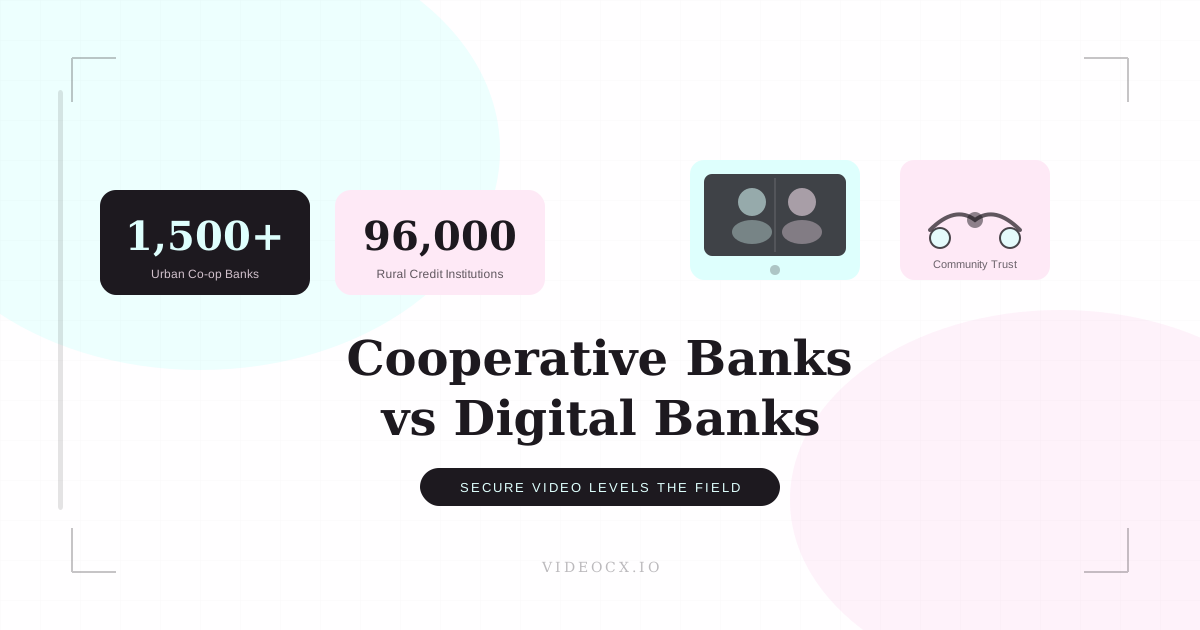
India has over 1,500 Urban Cooperative Banks and more than 96,000 rural cooperative credit institutions. These are banks built on trust, community roots, and the idea that banking should serve the people, not just make profit. They have done this for over a century. But in 2025, they are sitting at a crossroads. Digital banks and fintech apps are moving fast. They offer instant account opening, 24×7 service, and paperless everything. Cooperative banks, for all their goodness, are still asking customers to come to a branch with physical documents.
The good news: cooperative banks do not need to become tech giants to compete. They need one smart tool. Secure video.
Why Cooperative Banks Are Losing Ground
Let us be honest about what is happening.
Digital banks and fintech apps in India have changed what people expect from banking. Customers no longer want to take a half day off from work to visit a bank branch. They want to open accounts from their couch. They want loan approvals without waiting two weeks. They want to talk to someone who knows them, but they also want to do it from their phone.
Cooperative banks have real strengths: personal relationships, community trust, lower interest rates, and deep local knowledge. But they have a technology gap that is costing them customers every single day.
According to data from NABARD and RBI reports for 2024-25, the total number of Urban Cooperative Banks dropped from 1,926 in 2004 to around 1,500 by 2024. Regulatory pressures are part of the reason. But so is the customer migration to slicker, faster digital alternatives.
The answer is not to try to build the same app as a neobank. That costs crores and years. The answer is to use secure video technology to offer human-centred, compliant, and fast banking services without tearing down everything that makes cooperative banks great.
What Is Secure Video Banking and Why Does It Matter for Cooperatives?
Secure video banking is not just a video call. It is a structured, encrypted, and fully compliant way to serve banking customers through a live video channel.
For cooperative banks in India, this matters in three specific ways.
First, it makes customer onboarding fast and legal. The Reserve Bank of India allows banks to verify customers through what it calls the Video-based Customer Identification Process, or V-CIP. Under the 2025 KYC Master Directions issued by RBI on November 28, 2025, specific guidelines now exist for Urban Cooperative Banks and Rural Cooperative Banks separately. V-CIP is treated as equal to a face-to-face verification at a branch. This means a cooperative bank can onboard a new customer fully, legally, and digitally through a live video call with a bank officer. No branch visit required.
Second, it keeps the human element that cooperative banks are known for. Unlike a purely automated app, a video session has a real person on the other end. For a farmer in Pune or a small trader in Surat, talking to a familiar face from their bank, even over video, builds far more confidence than filling out forms on an app. This is the cooperative bank’s secret weapon. Technology enhances the relationship. It does not replace it.
Third, it costs a fraction of opening a new branch. Setting up a full video branch costs considerably less than building or renting a physical location, hiring full-time staff, and running daily operations. For cooperative banks that are under capital constraints, this is a practical path to expand service without burning through reserves.
Three Ways Cooperative Banks Can Use Secure Video Right Now
1. Video KYC for New Customer Onboarding
Right now, a cooperative bank customer who moves to a new city has to either visit the branch back home or find a way to get physically verified at a new location. Both options are inconvenient and often lead to the customer just switching to a private bank or fintech app instead.
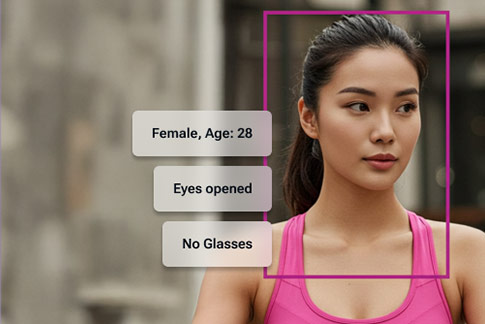
With video KYC, that problem disappears. A bank officer connects with the prospective customer via a live encrypted video call, checks their Aadhaar, verifies their PAN, confirms their face, and captures the required data points including GPS location, IP address, and session timestamp. All of this is RBI-compliant and audit-ready.
For a cooperative bank, this unlocks something huge: the ability to onboard NRI members, migrant workers from rural areas who now live in cities, and young customers who grew up in the bank’s community but now live elsewhere. These are exactly the people slipping away to digital-first competitors.
The process is not complicated. The bank needs a trained officer, a compliant video platform, and internet connectivity. The customer needs a smartphone. That is it.
2. Video-Based Credit Verification for Loans
Loan processing is where many cooperative banks still operate at a very slow pace. Field officers visit applicants at home or at their business. Documents are collected, checked, and passed up a chain. This takes time and money.
Video-based credit verification changes this. Instead of a physical visit, a credit officer can conduct a structured video call with the loan applicant. They can verify the person, review documents through a secure screen share or camera display, ask questions, and build a complete picture of the applicant’s situation, all in one session. The call is recorded and stored securely, creating an evidence trail that supports both the decision and regulatory compliance.
This is particularly powerful for cooperative banks that serve MSME borrowers, small traders, and self-employed individuals. These are people whose financial story does not always fit neatly into a credit score but makes complete sense when you speak with them directly. A video credit discussion lets a trained cooperative bank officer make a good lending decision faster, with full documentation, and without putting a field officer on a two-hour road trip.
3. Running a Video Branch for Member Services
A video branch is not just about opening accounts. It is a full-service channel through which cooperative bank members can speak to an officer about their fixed deposit, ask about loan eligibility, update their KYC documents, or get help with any banking query, all from their home or office.
For cooperative banks in particular, this solves a geography problem. Many cooperatives have deep trust in one city or district but want to serve members who have moved elsewhere. A video branch lets them do exactly that, keeping long-time members engaged and active rather than losing them by default.
It also extends service hours. A physical branch closes at 3:30 or 4:00 PM. A video channel can operate across more hours, serving professionals who cannot step away from work during banking hours. This alone removes one of the biggest practical complaints cooperative bank members have.
The RBI Compliance Picture: Why Now Is the Right Time
Cooperative banks in India are often cautious about new technology, and rightly so. Regulatory risk is real. But on video banking, the regulatory picture is unusually clear and supportive.
RBI issued specific KYC Master Directions for Urban Cooperative Banks and Rural Cooperative Banks in November 2025. These directions recognise V-CIP as a fully valid onboarding method. The framework requires live video sessions with a trained bank officer, liveness checks, geo-tagging, encrypted recording, and a documented audit trail. These are not obstacles. They are the standard that a good video banking platform already meets out of the box.
The CERSAI mandate updated in December 2024 also called on all banks, including cooperatives, to upgrade their KYC infrastructure. The regulatory environment is not just allowing video banking. It is actively pushing towards it.
For cooperative banks that have been hesitant, this is the signal. The regulator has made the path clear. The technology exists. The question is whether they act now or wait until more members have moved on.
What Cooperative Banks Should Look for in a Video Banking Partner
Not every video tool is built for banking. A cooperative bank needs a platform that is:
Secure and encrypted end to end. Customer data must stay within India, in compliance with the Digital Personal Data Protection Act, 2023 (DPDP Act). The platform must not retain any customer video data on vendor servers after the session.
Built for compliance. The system must capture GPS coordinates, session timestamps, and IP addresses automatically. It must support concurrent auditing, which means accounts opened via video KYC must be verified before they become active.
Simple for bank officers to use. Cooperative banks do not always have large IT teams. The interface must be straightforward, so that a trained officer can run a compliant video session without needing an engineering degree.
Integrated with the bank’s existing CBS. India’s cooperative banks have been migrating to Core Banking Solutions. A good video banking platform connects cleanly with these systems rather than creating a separate data silo.
The Opportunity Is Real and the Window Is Now
Here is something worth thinking about. The strength that cooperative banks have, community trust, personal relationships, and member ownership, is exactly what digital banks cannot easily replicate. A neobank can offer a slick app, but it cannot offer a 30-year relationship with a family. It cannot offer the shared stake of being both a customer and a part-owner of the institution.
Secure video banking lets cooperative banks take that existing trust and bring it into the digital world. It does not ask them to become something they are not. It asks them to serve their members the way they always have, just without the constraint of physical distance or working hours.
The cooperative banking model was built around the idea that people should be able to access good financial services without being pushed aside by institutions chasing only profit. That mission is still valid and still necessary. Secure video is the infrastructure that can make that mission work in a digital India.
Frequently Asked Questions
Is video KYC legally valid for cooperative banks in India? Yes. The Reserve Bank of India issued specific KYC Master Directions for Urban Cooperative Banks and Rural Cooperative Banks in November 2025. These explicitly recognise the Video-based Customer Identification Process (V-CIP) as equal to in-person verification at a branch, provided the platform meets all prescribed technical and procedural standards.
Can a cooperative bank run video KYC without a large IT team? Yes. A well-designed video banking platform handles the compliance requirements automatically, including session recording, GPS capture, liveness checking, and audit trail generation. The bank officer needs training on the process, not on the technology stack.
What is the difference between a video branch and video KYC? Video KYC is specifically the process of verifying a new customer’s identity through a live video call with a bank officer, using government-issued documents, to onboard them into the bank. A video branch is a broader service channel through which existing customers can also get banking support, account updates, and financial advice, all via secure video.
Can cooperative banks use video for loan processing too? Yes. Video-based credit verification allows loan officers to conduct structured interviews with applicants, review documents through the video call, and build a documented evidence trail to support lending decisions. This is especially useful for MSME and self-employed borrowers.
Is the customer’s data safe in a video banking session? Under RBI guidelines and the DPDP Act 2023, all session data including video recordings must remain within India and transfer to the bank’s own systems immediately after the call. No data should remain on the vendor’s servers. A compliant platform enforces this by design.
What kind of internet connection does a customer need for video KYC? A standard 4G mobile connection is sufficient for most video KYC sessions. Cooperative banks serving rural or semi-urban areas can also use adaptive video technology that adjusts quality based on available bandwidth, making it workable even on lower-speed connections.
How does video banking help cooperative banks compete with neobanks? Neobanks win on speed and convenience. Video banking lets cooperative banks match that speed and convenience for onboarding and service, while retaining the human relationship and personal attention that neobanks structurally cannot offer. It turns the cooperative bank’s strongest asset into a digital-era advantage.