



Every bank, NBFC and insurer in India now opens a large share of accounts and policies without the customer ever setting foot in a branch. The question is no longer whether to verify identity remotely. It is which method to trust for the job. Three options dominate the conversation: Video KYC, Aadhaar eKYC and biometric KYC.
They are often discussed as though they compete for the same slot in an onboarding flow. In reality each was built for a different moment in the customer journey, each carries a different compliance weight, and each creates a very different experience for the person on the other side of the screen. Choosing well means understanding what each method can and cannot do on its own.
This guide explains what the three methods are, how they compare on the things a compliance and operations team actually cares about, and how to decide which one belongs in your flow.
The short answer
If you are pressed for time, here is the summary before the detail:
- Aadhaar eKYC is fast and low friction, but on its own it is limited in what it can authorise, and the OTP based variant carries usage restrictions.
- Biometric KYC offers strong assurance, but it is tied to hardware and, in most cases, to the customer being physically present at a branch or business correspondent point.
- Video KYC is the only fully remote method that the Reserve Bank of India treats as equivalent to meeting the customer in person. That single fact is why it has become the backbone of remote onboarding for regulated institutions.
The rest of this article shows how each method earns that summary.
What each method actually is
Aadhaar eKYC
Aadhaar eKYC uses the customer’s Aadhaar number to pull their verified identity record from the UIDAI database. It comes in two common forms. The OTP based form authenticates the customer through a one time password sent to their Aadhaar linked mobile number. The offline form uses an Aadhaar XML file or a QR code that the customer supplies, which the institution then validates without a live call to UIDAI.
Aadhaar eKYC is quick and it removes almost all manual data entry, because the name, address and photograph flow straight from the source record. Its weakness is regulatory scope. The OTP based route has historically carried limits on how a resulting account may be used, precisely because a one time password proves control of a phone rather than the presence of a genuine person. For many products it needs to be paired with an additional verification step before the account is fully enabled.
Biometric KYC
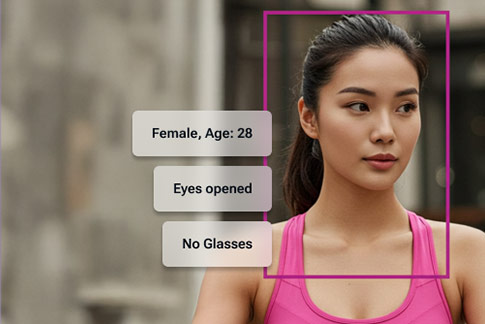
Biometric KYC authenticates the customer against the UIDAI record using a live fingerprint or iris scan captured on a certified device. Because it matches a physical biometric to the national identity database in the moment, it offers a very high level of assurance that the right person is present.
The cost of that assurance is hardware and location. Biometric capture needs a certified scanner, which means the customer usually has to be at a branch, a kiosk or a business correspondent point. It solves identity strongly, but it does not solve distance. For an institution trying to onboard a customer sitting at home in another city, biometric KYC on its own is rarely the answer.
Video KYC
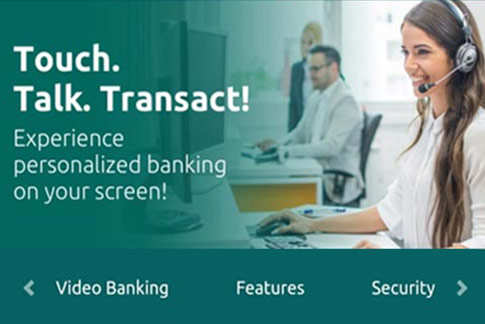
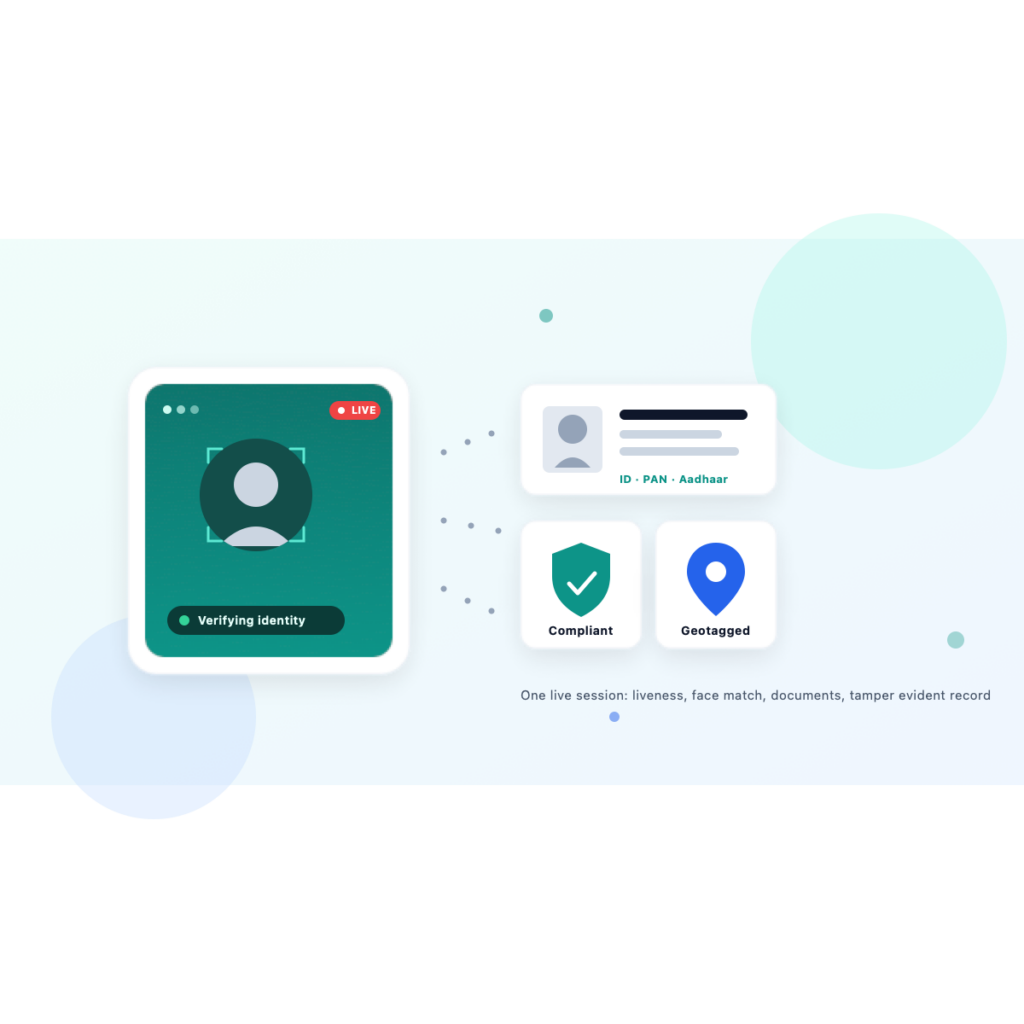
Video KYC, known in regulation as the Video based Customer Identification Process or V-CIP, lets a trained officer verify a customer over a live audio and visual session. In a single call the officer confirms a live human is present, captures a live photograph, checks identity documents such as PAN and Aadhaar, matches the face to the document, records the customer’s location and stores the entire interaction as a tamper evident recording.
The important point is legal standing. The Reserve Bank of India permits V-CIP as a valid alternative to in person verification for regulated entities. In other words, a correctly conducted video session carries the same weight as the customer visiting the branch. No other remote method offers that. This is why Video KYC has moved from a novelty to the default for banks, NBFCs and insurers opening high value relationships at a distance.
How they compare on what matters
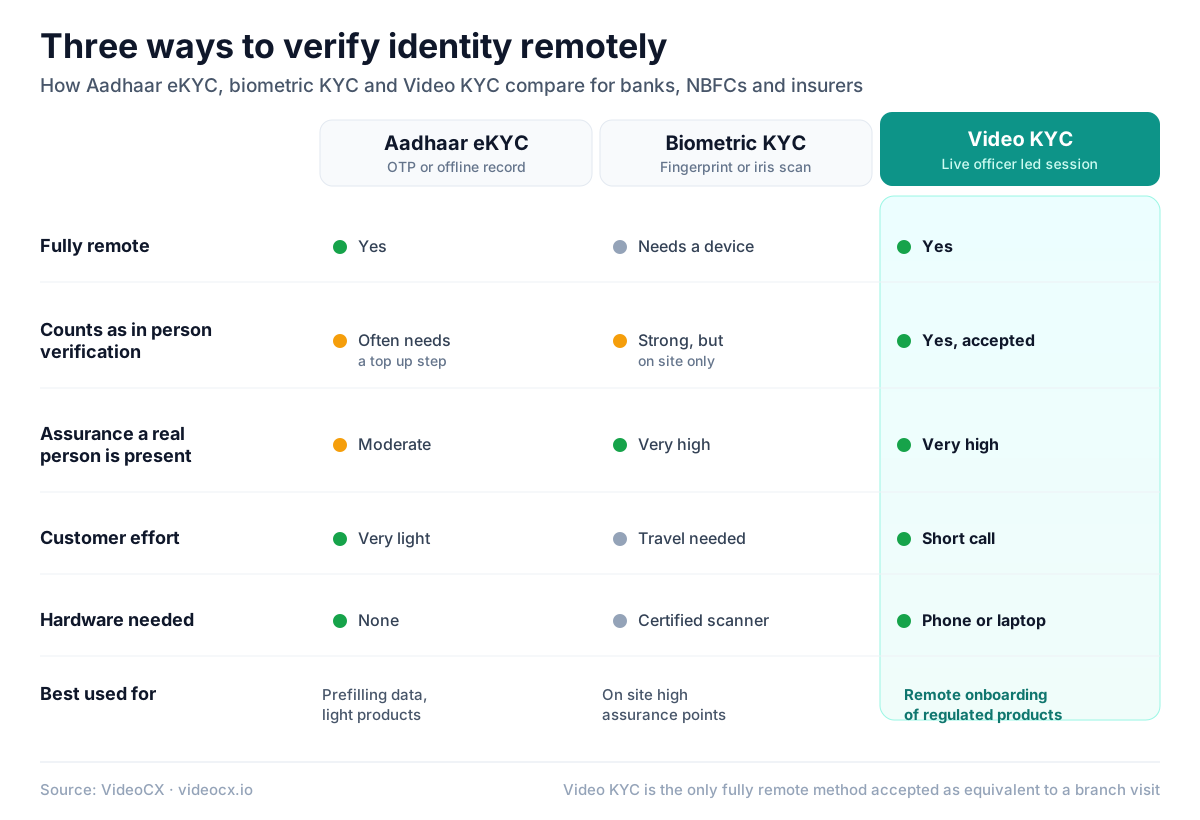
Below is the same three way comparison viewed through the lenses a decision maker weighs in practice.
Dimension | Aadhaar eKYC | Biometric KYC | Video KYC |
|---|---|---|---|
Fully remote | Yes | Rarely, needs a device | Yes |
Treated as equivalent to in person verification | No, often needs a top up step | Strong presence proof, but on site | Yes, accepted as equivalent |
Assurance the right person is present | Moderate for OTP, higher for offline | Very high | Very high |
Customer experience | Very light | Depends on travel and device | Light, a short guided call |
Fraud resistance | Vulnerable to phone and SIM misuse | Strong against impersonation | Strong, with liveness and human judgement |
Hardware needed | None | Certified scanner | A smartphone or laptop camera |
Audit trail | Data record only | Transaction log | Full recording plus data and location |
Best fit | Prefilling data and light products | On site, high assurance points | Remote onboarding of regulated products |
Regulatory standing
For a compliance team this is usually the deciding factor. Aadhaar eKYC by OTP frequently needs to be completed by a further step before an account is fully usable. Biometric KYC proves presence powerfully but expects that presence to be physical. Video KYC is the method the regulator has explicitly accepted as standing in for a branch visit, which is what lets an institution open a fully enabled account for a customer it never physically meets.
Assurance and fraud resistance
A one time password proves that someone controls a phone. It does not prove who that someone is, which is why SIM swap and mobile takeover fraud target exactly this gap. Biometrics close that gap by binding the check to a living fingerprint or iris. Video does it differently, by combining automated liveness and face matching with the judgement of a trained officer who can spot hesitation, coaching off camera or a document that does not look right. The strongest onboarding flows treat these as layers rather than rivals, and Video KYC is designed to hold those layers in one session.
Customer experience and drop off
Every extra minute and every extra step in onboarding costs completed accounts. Aadhaar OTP feels effortless, which is its main appeal, but the follow up step it often requires erases some of that benefit. Biometric KYC asks the customer to travel, which is the heaviest friction of the three. Video KYC sits in between. A well designed session is a short guided call the customer can take from home, and when the flow is built to reduce waiting and reconnects, completion rates stay high.
Cost
Aadhaar eKYC has a low direct cost per check. Biometric KYC carries device and premises cost that only makes sense where volumes at a location justify it. Video KYC has an operational cost per session, since it can involve an officer’s time, but it removes the far larger cost of branch space and travel for both sides, and modern platforms drive the per session cost down through assisted automation and intelligent routing. When you compare against the true cost of a branch KYC, video is usually the more economical route for remote onboarding at scale.
So which one should you use
The honest answer is that these methods are not really competitors. The best onboarding journeys use them together, each where it is strongest.
- Use Aadhaar eKYC to prefill verified customer data and to power light, low risk products where a quick check is proportionate.
- Use biometric KYC where the customer is already at a branch, a kiosk or a business correspondent point and you want the highest possible proof of presence on the spot.
- Use Video KYC whenever you need to open a fully enabled, regulated product for a customer who is not in front of you, and you need that remote check to carry the same standing as a branch visit.
For most banks, NBFCs and insurers building a remote first onboarding strategy, Video KYC is the anchor and the other two are supporting players. It is the one method that combines full remoteness, regulatory equivalence and a defensible audit trail in a single customer friendly session.
Where VideoCX fits
VideoCX is an enterprise Video KYC and video banking platform built for the compliance realities of Indian BFSI. It brings automated liveness and face matching, document capture, geotagging, a tamper evident recording of every session and a checker workflow for audit, all inside a routing engine that keeps agents productive at volume. If you are weighing how to make remote onboarding both compliant and comfortable for the customer, this is the layer that ties the identity methods above into one dependable journey.
If you would like to see how a compliant video session works end to end, explore our Video KYC platform or talk to our team about your onboarding volumes.