





At some point every institution that takes remote onboarding seriously asks the same question. Do we build our own Video KYC system, or do we buy a platform that already does it? On the surface it looks like a straightforward cost comparison. In practice it is a decision about where you want your engineering effort, your compliance risk and your future headaches to sit.
This guide lays out what building really involves, what buying gives you, and how to make the call with clear eyes. It ends with a short checklist you can use to evaluate any platform you consider.
The short answer
- Building gives you total control, but it means owning video infrastructure, liveness and face matching, document intelligence, security certifications, and a permanent obligation to keep pace with changing regulation. The visible cost is the smaller part of the bill.
- Buying gives you a compliant, proven system quickly, with the vendor carrying the burden of uptime, security and regulatory change, in exchange for a per session or licence cost and a dependence on that partner.
- For the large majority of banks, NBFCs and insurers, buying a specialist platform is the faster, safer and ultimately cheaper route, because identity verification is not where their competitive advantage lies.
What building in house really involves
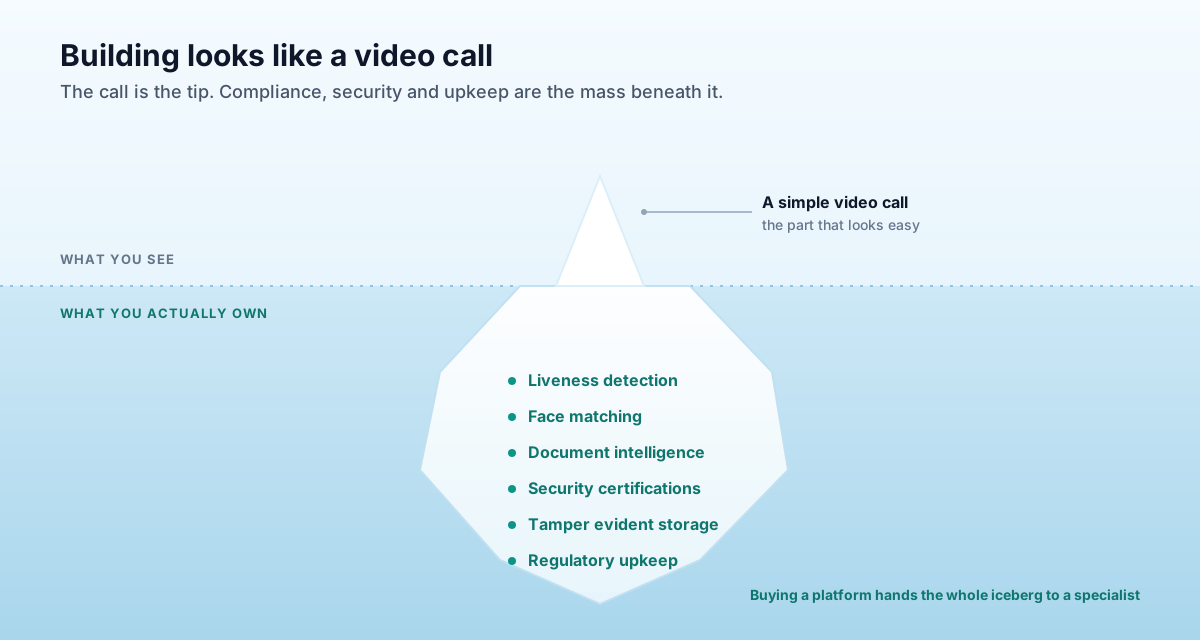
The instinct to build is understandable. You keep control, you avoid a vendor, and a simple video call feels like something an engineering team can put together. The difficulty is that a compliant Video KYC system is not a video call. It is a stack of hard problems that all have to work together, every time, at scale.
To build it yourself you take on all of the following:
- Reliable video infrastructure that holds a clear connection on weak mobile networks, across thousands of concurrent sessions, without dropping the call at the moment identity is being captured.
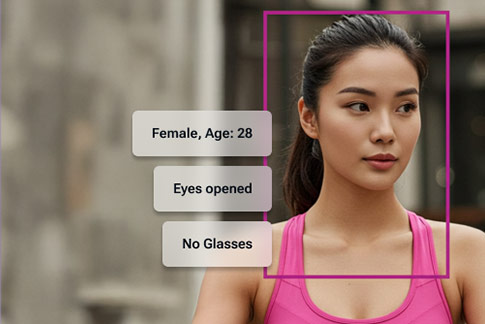
- Liveness detection strong enough to tell a live person from a photograph, a mask or a replayed video, and to keep up as spoofing techniques evolve.
- Face matching that reliably confirms the person on the call is the person on the document, across lighting, cameras and image quality you do not control.
- Document intelligence that reads and validates identity documents and flags tampering.
- A secure, tamper evident recording of every session, stored to a standard that will satisfy an auditor years later.
- Security certifications and data protection that meet the expectations placed on a regulated financial institution.
- A permanent regulatory watch, so the flow keeps pace every time the rules for remote verification change.
None of these is a one time build. Each is a living system that needs a specialist team to maintain long after launch. That is the cost the initial estimate rarely captures.
What buying gives you
A specialist platform exists precisely because these problems are hard and shared. When you buy, you get a system in which liveness, face matching, document checks, recording, routing and compliance have already been solved, hardened across many institutions, and are kept current by a team whose entire job is to do so.
The clearest benefits are speed and shifted risk. You move from a multi quarter build to a configuration exercise measured in weeks. Uptime, security patching, spoofing defence and regulatory updates become the vendor’s responsibility rather than a standing draw on your own engineers. Your team stays focused on the products and customer relationships that actually differentiate you, while identity verification simply works underneath them.
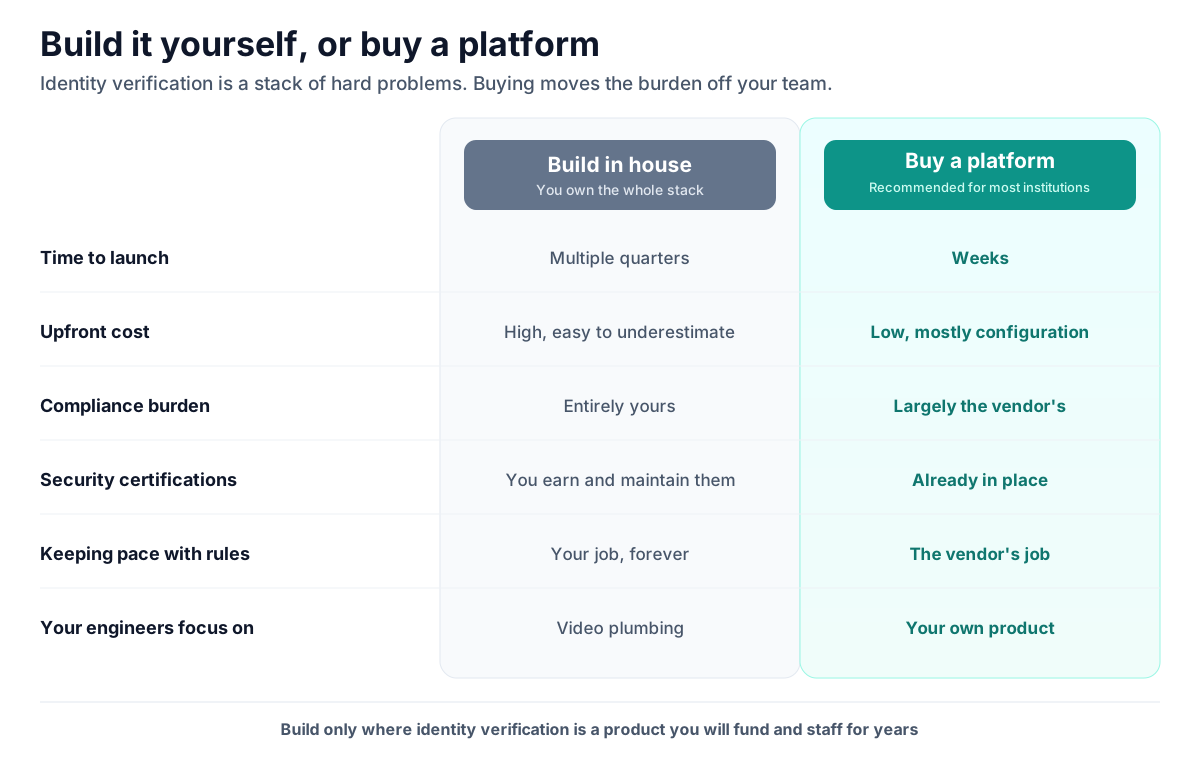
How build and buy compare
Dimension | Build in house | Buy a platform |
|---|---|---|
Time to launch | Multiple quarters | Weeks |
Upfront cost | High and easy to underestimate | Low, mostly configuration |
Ongoing cost | A permanent specialist team | Predictable per session or licence |
Compliance burden | Entirely yours | Largely carried by the vendor |
Security certifications | You must earn and maintain them | Already in place |
Keeping pace with regulation | Your responsibility, forever | The vendor’s responsibility |
Scale at peak | Limited by what you built | Built for high concurrency |
Control and customisation | Total | High, within the platform |
Where your engineers focus | On plumbing | On your product |
The hidden costs of building
When a build looks cheaper than a platform, the estimate has usually left things out. The recurring costs that surface later include the specialist team you must keep on to maintain liveness and security, the effort of re engineering the flow every time the rules change, the price of earning and holding the certifications a regulated institution needs, and the opportunity cost of the roadmap your engineers did not ship because they were maintaining video plumbing. There is also the quiet risk cost: if an in house liveness check falls behind current spoofing methods, the loss is not a line item, it is a fraud event and its fallout.
When building might still make sense
Building is not always wrong. It can be defensible for a very large institution with a deep in house engineering and compliance function, a genuinely unusual requirement that no platform serves, and the appetite to treat identity verification as a long term product it will fund and staff indefinitely. Even then, many such institutions choose to buy, because the effort returns more when spent on their own customers than on rebuilding a solved problem. For everyone else, buying is the sound default.
A buyer’s checklist
If you decide to buy, evaluate any platform against questions like these:
- How strong and how current is the liveness and anti spoofing capability?
- Does it support both assisted and self serve journeys, with routing between them?
- Is every session stored as a tamper evident record an auditor will accept?
- What security certifications and data protection standards does it hold?
- Can it be hosted the way your policy requires, including on premise options where needed?
- Does it offer clean APIs and an SDK so it fits inside your existing app and journeys?
- How does it handle peak concurrency without failing sessions?
- How quickly does the vendor adapt when the regulator changes the rules?
A platform that answers these well removes far more risk than it introduces.
Where VideoCX fits
VideoCX is an enterprise Video KYC and video banking platform built for the compliance realities of Indian BFSI. It brings liveness, face matching, document capture, geotagging, tamper evident recording, assisted and self serve journeys and an intelligent routing engine together in one system, with clean APIs, an in app SDK and on premise hosting options for institutions that need them. In other words, it answers the checklist above out of the box, so you get a compliant remote onboarding flow in weeks rather than quarters, and you keep your engineers on your own product.
To weigh a platform against your own build estimate, see the VideoCX platform and its APIs or talk to our team about your requirements.