

Picture a garment manufacturer in Tirupur. She has a confirmed export order sitting on her table. The buyer needs delivery in 45 days. She needs working capital in the next two weeks to buy fabric, pay workers, and book freight. She walks into her bank, fills out forms, waits for a field officer to visit, submits more documents, and is told approvals take three to four weeks. By the time the loan comes through, the order is lost.
This is not an unusual story. For millions of small business owners across India, this is just Tuesday.
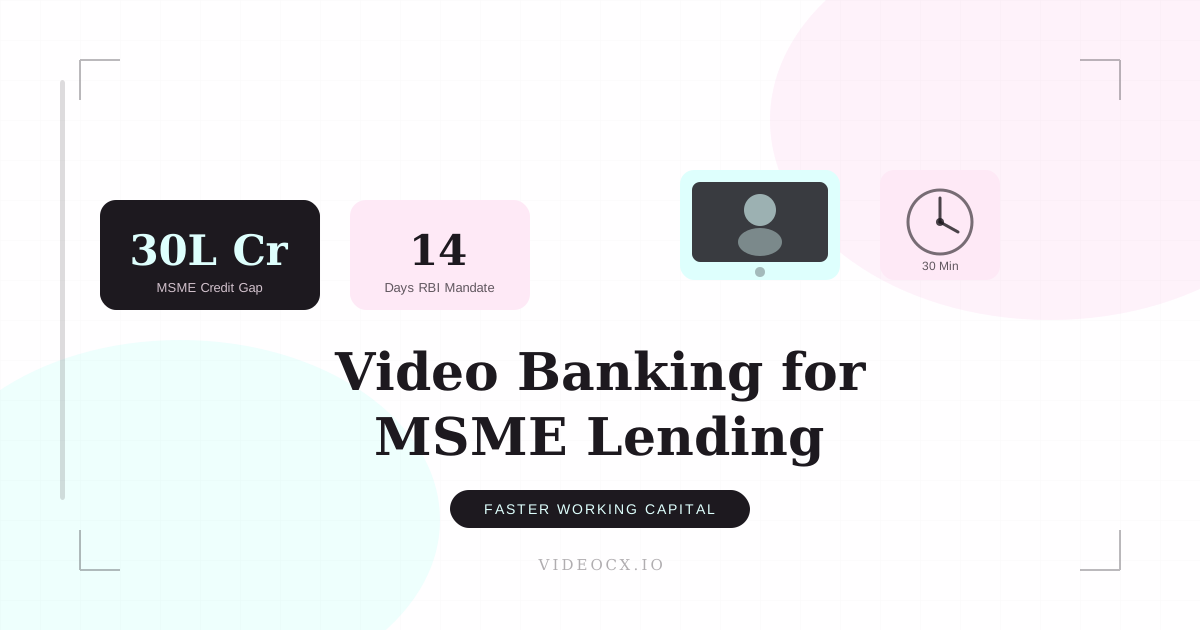
India’s MSME sector contributes nearly 30 percent of GDP, generates over 110 million jobs, and accounts for close to 46 percent of the country’s exports. Yet a May 2025 report by SIDBI, prepared in partnership with CRISIL Intelligence and covering over 2,000 MSMEs across 19 sectors, puts the sector’s addressable credit gap at a staggering Rs 30 lakh crore. That is nearly 24 percent of total debt demand going unmet. The problem is not just the amount of credit. It is also how slowly it moves.
Working capital, by its very nature, is time-sensitive. A business waiting four weeks for a loan that covers a 30-day inventory cycle has already failed by the time the funds arrive. Banks know this. The question is what they can do about it.
The answer that is gaining serious traction in 2026 is secure video banking.
Why Working Capital Approvals Are Still So Slow
Banks are not slow because they want to be. They are slow because the traditional credit process was built for a world of paper documents, physical offices, and in-person verification.
Here is what a typical working capital loan process looks like for an MSME today at many banks:
The business owner visits the branch to submit an application. A loan officer schedules a field visit to the business premises. The field officer comes, sometimes after days of waiting, to verify the business is operational, check stock and assets, and collect documents. The documents go back to the branch. A credit team reviews them. If anything is missing or unclear, the business gets another call, which means more days of back and forth. Then the sanctioning authority reviews and approves.
Every step in this chain is a handoff. Every handoff is a delay. And every delay is a cost to the business owner who is paying for informal credit in the meantime, borrowing from family, or simply watching the opportunity disappear.
For loans up to Rs 25 lakh for micro and small enterprises, the Reserve Bank of India now mandates that banks complete credit decisions within 14 working days. That is progress. But 14 working days is still nearly three calendar weeks for a business that needs cash to run its payroll on Friday.
The field visit model, in particular, is expensive and slow. It ties up loan officers, creates inconsistent assessment quality depending on who does the visit, and is nearly impossible to scale during high-demand periods like the pre-festive season when MSME credit demand spikes.
What Secure Video Changes for MSME Credit
Secure video does not remove the need for human judgment in lending. It removes the logistical friction that slows human judgment down.
Here is what changes when a bank adds video to its MSME credit workflow.
Faster, Fully Compliant Customer Onboarding
Before a loan can be sanctioned, the customer must be identified and verified. For new MSME borrowers, this means KYC. Traditionally, this required a branch visit or a field agent visit. Either way, it takes days.
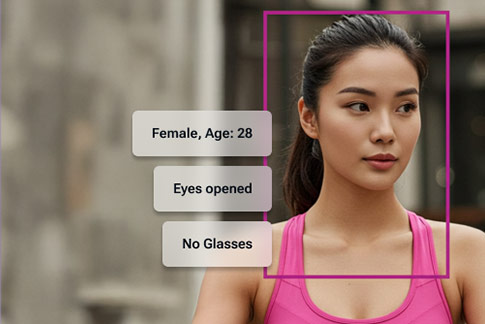
With video KYC, a bank officer connects with the borrower on a live encrypted video call. They verify the applicant’s Aadhaar and PAN, perform a liveness check, confirm identity, and capture all RBI-mandated data including the GPS location, IP address, and session timestamp. This is India’s Video-based Customer Identification Process, or V-CIP, which the Reserve Bank of India recognises as equivalent to a face-to-face branch verification under the KYC Master Directions issued in November 2025.
What used to take two to three days, including travel time and scheduling, now takes 20 to 30 minutes in a single scheduled video session. And the output is the same: a fully documented, audit-ready record that satisfies regulatory requirements.
For MSME borrowers who are registered on Udyam but have never visited a bank branch, this removes the first and most common barrier to entering the formal credit system entirely.
Video-Based Business and Credit Verification
This is where video banking makes the biggest difference to working capital timelines.
The traditional field visit has two purposes. One is to verify that the business exists and is operational. The second is to assess the borrower’s credibility and understand the business context that numbers alone cannot show. A loan officer who visits a garment unit can see whether the machines are running, whether workers are present, and whether the owner’s story matches the bank statements.
Video-based credit verification replaces the physical field visit with a structured live video session. The credit officer schedules a video call at the borrower’s premises. During the call, the business owner can do a walkthrough of the unit on camera, show stock and equipment, and answer the officer’s questions in real time. Documents can be shared through a secure channel during the call. The session is recorded, time-stamped, and stored as part of the loan file.
The output is the same as a field visit: a verified, documented assessment of the borrower’s business. The difference is that it takes a few hours instead of several days, does not require a loan officer to travel, and produces a consistent, reviewable record that supervisors and auditors can check.
For banks managing high volumes of MSME loan applications, this is transformative. A single credit officer can complete more verifications in a day through video than they could in a week through field visits. And because each session is recorded, the quality of assessment becomes auditable and improvable over time.
Ongoing Loan Reviews Through a Video Branch
Working capital lending is not a one-time event. It involves renewals, limit enhancements, covenant reviews, and relationship conversations. Every one of these touchpoints, under the traditional model, requires another branch visit or another field trip.
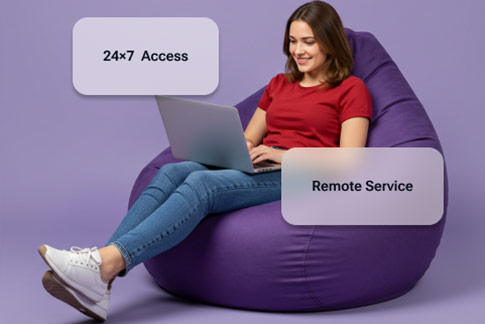
A video branch lets an MSME borrower speak with their relationship manager, submit updated financials, discuss a limit increase, or resolve a documentation gap, all through a scheduled video session. The business owner does not need to take two hours out of their workday to travel to a branch. The bank officer does not need to block half their day for travel to a business in an industrial area on the outskirts of town.
This matters more than it might seem. A lot of MSME credit stress comes from communication gaps. Borrowers who fall behind on repayments sometimes go silent because they find it difficult to walk into a branch and explain their situation. A video channel makes that conversation easier and more likely to happen, which is better for the borrower and better for the bank’s portfolio quality.
The Scale of the Opportunity for Banks
The Government of India launched its Credit Assessment Model for MSMEs in March 2025, announced by Finance Minister Nirmala Sitharaman. Public sector banks processed 560,655 MSME loan applications under the new digital framework between April and October of FY 2025-26, sanctioning Rs 28,724 crore across 261,281 proposals. Around 188,999 applications were still under processing at the time of reporting.
That pipeline tells the story. There is massive demand. The system is moving faster than before. But nearly one in three applications was still being processed after months, not weeks. The field verification bottleneck is a real constraint on throughput.
A SIDBI survey of MSMEs in 2025 found that 90 percent of MSMEs already accept digital payments. That means the borrowers are digitally ready. It is the banks’ internal processes that need to catch up.
Video banking is not the only answer. But it is one of the most immediately deployable tools that addresses the specific friction points: identity verification, business assessment, and relationship management, without requiring the borrower or the bank to fundamentally change how they think about lending.
What Banks Should Keep in Mind When Deploying Video for MSME Credit
Compliance is non-negotiable. Video sessions used for KYC and credit must meet RBI standards. This includes live officer participation, liveness detection, GPS and timestamp capture, encrypted recordings, and data stored within India under DPDP Act 2023 requirements.
The video session must be structured, not informal. A structured checklist for each video credit call ensures that officers capture consistent information across all borrowers. This supports both credit quality and regulatory auditability.
Integration with CBS and LOS matters. Video sessions that exist in a separate silo do not add efficiency. The video verification output should feed directly into the loan origination system so there is no manual re-entry.
Officer training is essential. A video credit session requires different skills than a branch interaction or a field visit. Officers need to know how to guide a borrower through a business walkthrough on camera, how to prompt document sharing, and how to conduct the session within the regulatory framework.
Bandwidth in Tier 2 and Tier 3 cities. A good video banking platform should handle adaptive quality, adjusting to the available connection speed so that MSME borrowers in semi-urban areas are not disadvantaged by connectivity gaps.
The Bigger Picture: Closing the Rs 30 Lakh Crore Credit Gap
India cannot close a Rs 30 lakh crore MSME credit gap by building more branches or hiring more field officers. The economics do not work. Every physical touchpoint adds cost, and that cost either gets passed on to the borrower through higher rates or absorbed by the bank through thinner margins on small-ticket loans.
Digital credit assessment using GST data, bank statements, and ITR is part of the answer. So is CGTMSE’s collateral-free guarantee cover. So are Account Aggregator-based data access frameworks. But all of these work better when the human layer, the conversations that give context to numbers, can happen at speed and scale.
Secure video is that human layer, freed from the constraints of geography and scheduling. It lets banks be present with their MSME borrowers without physically being there.
The garment manufacturer in Tirupur should not lose an export order because it took three weeks for a field officer to visit her factory. Her bank has every tool it needs to make that assessment in a single afternoon. The only question is whether they are using it.
Frequently Asked Questions
Is video credit verification accepted by Indian banking regulators? Yes. The RBI’s V-CIP framework, updated through the 2025 KYC Master Directions, allows banks to verify customer identity and conduct customer due diligence through live video sessions. Video-based business verification for credit decisions is permissible under bank lending policies and is consistent with the government’s digital credit assessment framework launched in March 2025.
Can video banking work for small MSME loans, not just large ones? Video banking is particularly effective for smaller ticket sizes because it brings the cost of assessment down significantly. For loans below Rs 25 lakh, where RBI requires a decision within 14 working days, video-based verification can help banks meet that timeline with room to spare.
What documents can be verified during a video credit call? During a structured video credit session, officers can verify GST registration, Udyam certificate, bank statements, invoices, stock registers, and other business documents. The borrower shares documents on camera or through a secure co-browsing channel, and the session is recorded for the credit file.
How does video verification compare to AI-only or automated credit scoring? Automated models assess what is in the data. Video verification captures what is not: the business owner’s confidence and knowledge, the actual state of operations, and contextual factors that explain anomalies in financial data. For MSME lending especially, both are valuable, and video adds the human dimension that pure algorithms miss.
What happens if the borrower’s internet connection is poor? A well-designed video banking platform adapts to available bandwidth, reducing video quality to maintain the connection rather than dropping the call. For borrowers in areas with consistently poor connectivity, the bank can schedule the call at a time or location with better signal, or use a mobile data connection from an urban area.
Does the video session need a special app on the borrower’s phone? This depends on the platform. Many video banking solutions work through a browser link sent to the borrower’s phone via SMS, with no app download required. This lowers the barrier for MSME borrowers who may be reluctant to install new software.
How long does a video credit verification call typically take? A structured video credit verification session for a working capital loan typically takes 30 to 60 minutes, including the business walkthrough, document review, and officer Q and A. This compares to a field visit that often takes half a day or more when travel time is included.