



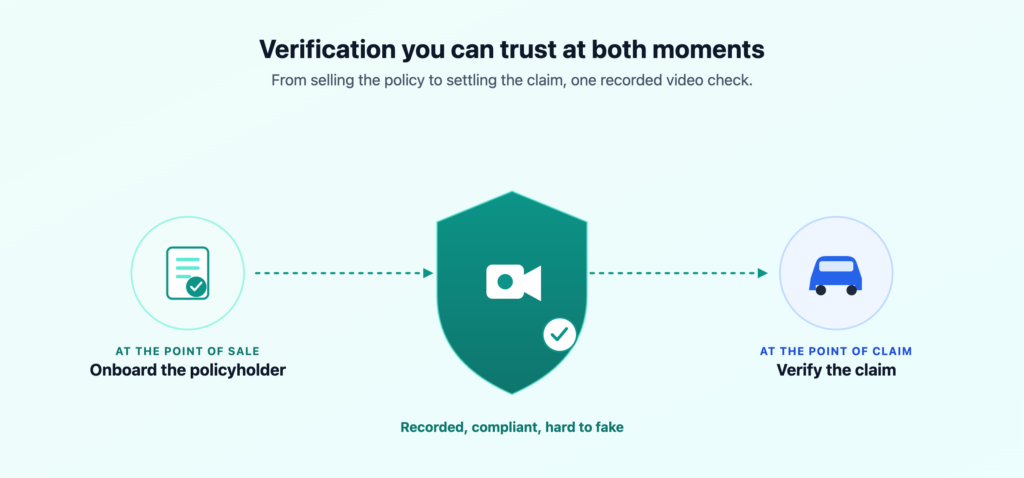
Most conversations about Video KYC stop at onboarding: verify the customer, open the account, move on. For insurance, that is only half the story. An insurer’s relationship with a customer has two moments that turn on trust and verification, not one. The first is when the policy is sold and the policyholder is onboarded. The second, often years later, is when a claim is made and the insurer has to be sure it is genuine. Video verification has a role in both, and treating them as one connected capability is where insurers find the real value.
This guide looks at how video verification serves the whole insurance lifecycle, from remote onboarding of a new policyholder to verifying a claim over video, and why doing both on one dependable platform matters for cost, fraud and customer experience alike.
The short answer
- Insurance has two verification moments, onboarding the policyholder and verifying the claim, and both have traditionally involved slow, in person or paper heavy processes.
- Video KYC handles compliant remote onboarding of policyholders, and the same video capability supports remote claims verification, letting an insurer confirm a claim without always sending a surveyor or asking the customer to travel.
- Bringing both onto one platform speeds up selling and settling, strengthens fraud control at both ends, and gives the customer a far better experience in the two moments that most shape how they feel about their insurer.
Onboarding the policyholder
Selling insurance remotely runs into the same verification requirement as any regulated financial product. Before a policy goes fully live, the insurer needs to confirm the policyholder is a real, identified person, and doing that by post or by sending an agent is slow enough to lose sales, particularly for the digital first customers insurers increasingly want to reach.
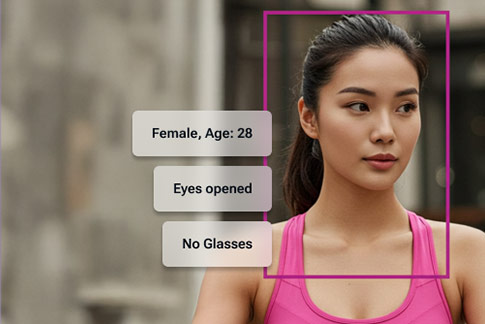
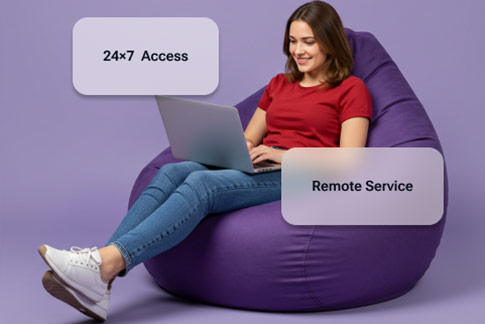
Video KYC answers this the same way it does for banking. In a single guided session the platform confirms a live person is present, captures a live photograph, reads and validates identity documents, matches the face to the document, records the session as a tamper evident file and completes the regulator accepted verification that issuing the policy requires. The policyholder does it from home, in minutes, and the policy is onboarded on a compliant footing without a courier or a branch. For an insurer selling through a digital channel, this is what keeps the buying experience as smooth as the marketing that led to it.
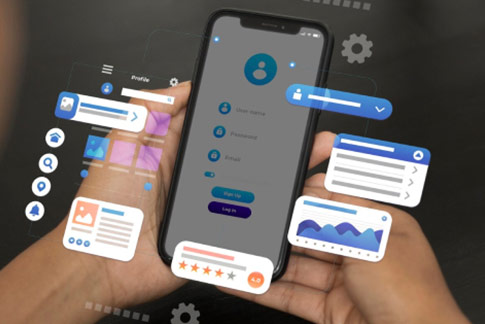
The properties that matter here are familiar. Self serve journeys let high volume, straightforward policies clear without an agent, while assisted sessions handle higher value or more complex cases. Clean APIs and an in app SDK put the session inside the insurer’s own journey. And every session is stored as an auditable record, which an insurer values not only for compliance but because that same record becomes useful later.
Verifying the claim
The second moment is where insurance is different from banking, and where video verification earns its place beyond onboarding. When a claim is made, the insurer faces its own verification problem: is this claim genuine, is the claimant who they say they are, and is the loss what it is described to be. Traditionally that has meant a surveyor visiting in person, or the customer submitting documents and photographs and then waiting, sometimes a long time, for a decision.
Video brings the same remove the distance logic to claims. A claim can be verified over a live video session in which the claimant confirms their identity, the insurer’s representative sees the situation directly through the camera, and the whole interaction is captured as a tamper evident record. For many claims, especially lower value or straightforward ones, this replaces the delay and cost of a physical visit with a call that can happen the same day. The customer is not left waiting, and the insurer gets a richer, first hand view than a folder of submitted photos provides.
The fraud benefit is significant. A live, recorded video interaction, backed by AI based video analysis, is far harder to fake than submitted documents and images, which can be reused, edited or borrowed from elsewhere. Seeing and hearing the claimant in real time, with identity confirmed in the same session, closes gaps that a paper claims process leaves open. And because the session is recorded, the insurer holds clear evidence of exactly how the claim was verified if it is ever questioned. It is this second moment, the claim, that made us build VideoCX.io as a general video verification platform rather than an onboarding tool alone, because the same live, recorded, identity confirmed session is exactly what a claim needs.
Why one platform for both matters
Onboarding and claims are usually run as separate worlds, with separate tools and separate records. Bringing both onto one video verification platform changes what an insurer can do.
Lifecycle moment | Old way | With video verification |
|---|---|---|
Onboarding a policyholder | Posted forms or an agent visit | A compliant video session from home, in minutes |
Confirming identity | Paper documents, manual checks | Live liveness, face match and document capture |
Verifying a claim | Surveyor visit or submitted photos | A live video session, often the same day |
Fraud control | Documents that can be reused | A recorded, real time interaction, hard to fake |
Record for audit | Scattered across processes | One tamper evident record per interaction |
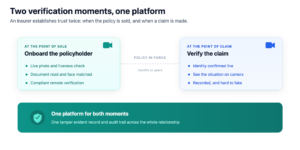
When both moments share a platform, as they do on VideoCX.io, the identity captured at onboarding can inform the claim later, the customer experiences one consistent way of dealing with their insurer, and the insurer holds a coherent, auditable trail across the whole relationship rather than fragments from different systems. The saving is not only cost, it is coherence.
The payoff across the lifecycle
The benefits compound because they land at both ends of the relationship. Policies are sold and onboarded faster, so fewer buyers are lost to a slow start. Claims are verified sooner and more cheaply, so settlement speeds up and surveyor cost falls where a visit is not truly needed. Fraud is harder at both onboarding and claim, because a live recorded session resists the impersonation and document reuse that paper processes invite. And the customer, who judges an insurer most harshly in exactly these two moments, gets a fast, respectful experience when buying and again when claiming, which is where loyalty is actually won. Leading Indian insurers already run these journeys over video, across both life insurance and general insurance.
For an insurer, verification is not a one time gate at the door. It is a capability that pays back every time trust has to be established, and video is what lets that happen remotely without weakening it, at the point of sale and at the point of claim alike.
If you would like to see how video verification would work across your policy lifecycle, you can explore the VideoCX.io Video KYC platform or talk to our team about onboarding and claims.
Related reading: Video KYC vs Aadhaar eKYC vs Biometric KYC: Which Verification Method Fits Your Institution and Assisted vs Self Serve Video KYC: Choosing the Right Onboarding Model. See also Insurance Policy Servicing on video.