

Once an institution decides to onboard customers over video, a second question follows quickly. Should a trained agent lead every session, or should the customer complete the check on their own with the platform guiding them? This single choice shapes your completion rates, your cost per account, your fraud exposure and even the products you can safely open at a distance.
Both models are valid. Both are used at scale across Indian banking, lending and insurance. The right answer depends on the product, the customer and the level of assurance the flow needs to carry. This guide explains what each model is, how they differ on the things that matter, and how leading institutions increasingly use both together rather than picking just one.
The short answer
- Assisted Video KYC puts a trained officer on the call. It gives the highest assurance and handles complex or high value cases well, at the cost of agent time.
- Self serve Video KYC lets the customer complete the session alone, guided by the platform and its automated checks. It scales almost without limit and costs less per session, and it suits lighter, higher volume journeys.
- The strongest onboarding strategies use both, routing each customer to the right model based on risk, product and how the session is going.
What is assisted Video KYC
In an assisted flow, a trained verification officer joins the customer on a live call. The officer confirms a real person is present, checks documents in real time, asks any questions the risk policy requires, watches for signs of coaching or coercion off screen, and makes a human judgement before approving. The platform still runs its automated checks in the background, but a person owns the decision.
Assisted Video KYC is the model regulators had in mind when they accepted video verification as equivalent to meeting the customer in person. The human in the loop is exactly what gives the session its weight. It is the natural fit for opening a full bank account, sanctioning a loan or onboarding a wealth relationship, where the cost of getting identity wrong is high and a moment of human judgement is worth the agent minutes it takes.
The trade you accept is throughput. Every assisted session needs an available officer, so peak volumes depend on how many trained agents you can staff and how efficiently you route work to them.
What is self serve Video KYC
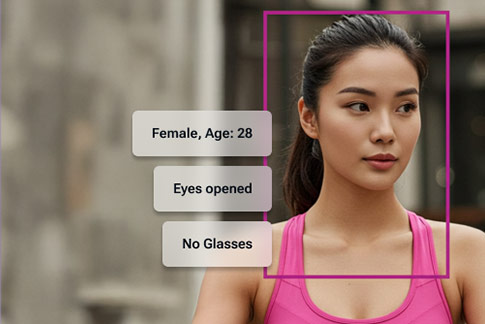
In a self serve flow, sometimes called non assisted video KYC, the customer completes the session on their own. The platform guides them step by step: it captures a live photograph, runs liveness and face matching, reads the identity documents, records location and stores the full session, all without an agent on the line. Cases that pass every automated check clear straight through. Anything the system is unsure about is flagged for a human to review afterwards or is escalated to a live agent.
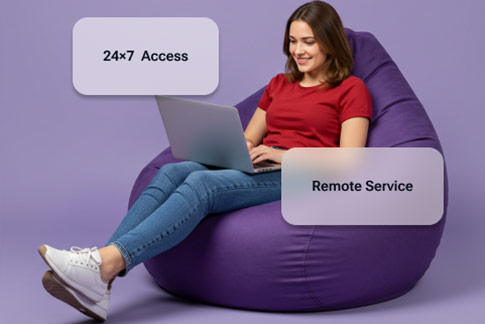
The appeal is scale and cost. A self serve flow can handle thousands of sessions at once, at any hour, without a queue for an agent. It removes the single biggest constraint on assisted models, which is agent availability, and it drives the cost per session down sharply. For high volume, lower risk journeys, this is often the difference between onboarding everyone who applies and losing a share of them to a wait.
The trade here is that assurance leans more heavily on automation. The quality of your liveness detection, face matching and document checks becomes the whole safety net, so the platform doing the work has to be genuinely strong, and a sensible review process needs to sit behind it.
How the two models compare
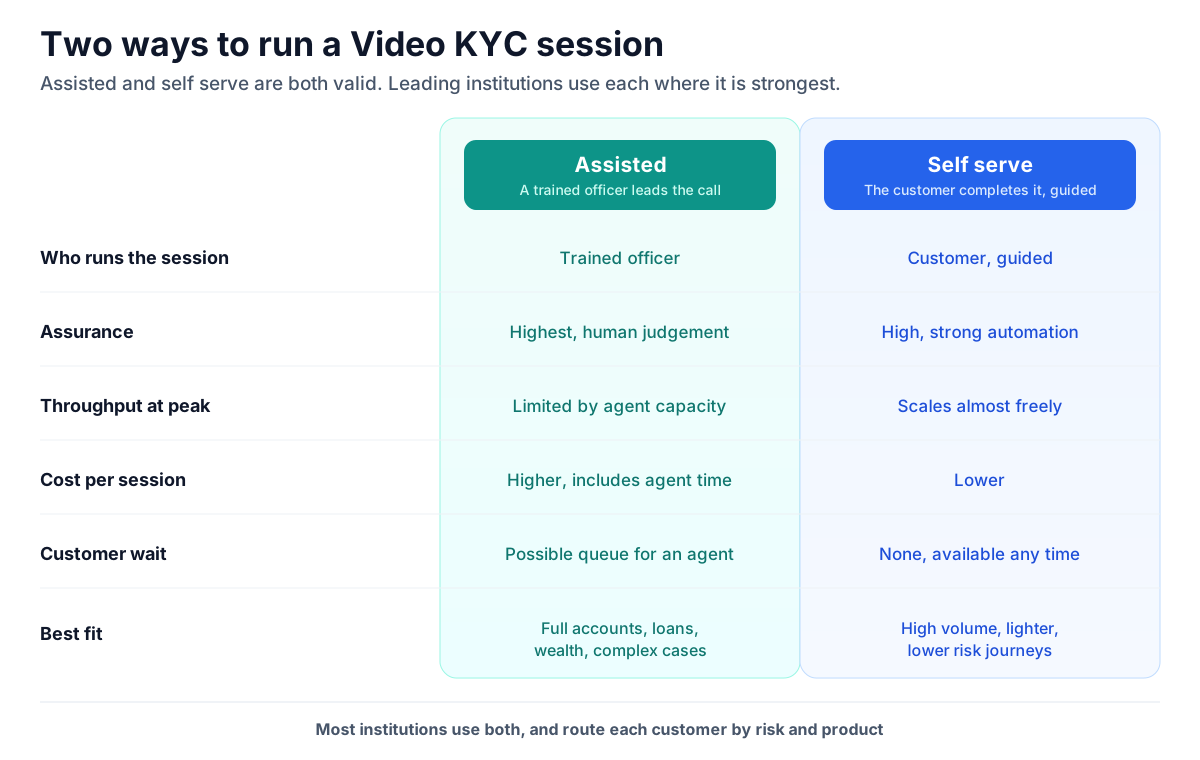
Dimension | Assisted Video KYC | Self serve Video KYC |
|---|---|---|
Who runs the session | A trained officer | The customer, guided by the platform |
Assurance | Highest, human judgement | High, depends on automation quality |
Throughput at peak | Limited by agent capacity | Scales almost without limit |
Cost per session | Higher, includes agent time | Lower |
Customer wait | Possible queue for an agent | None, available any time |
Fraud handling | Officer can spot coaching and hesitation | Automated liveness plus review behind it |
Best fit | Full accounts, loans, wealth, complex cases | High volume, lighter, lower risk journeys |
Completion and drop off
Every extra minute of waiting costs completed accounts. Self serve flows shine here because there is no queue: the customer starts and finishes on their own schedule, including outside branch hours. Assisted flows can match this experience when routing is efficient and wait times stay short, but they will always depend on having an agent free at the moment the customer is ready.
Compliance and assurance
Assisted sessions carry the reassurance of a human decision, which many institutions prefer for their highest risk products. Self serve sessions can meet a high bar too, but the burden shifts onto the strength of the automated checks and the review process behind them. The question to ask is not which model is compliant, since both can be, but how much of the assurance you want a person to own for a given product.
Cost and scale
Assisted models cost more per session because they consume agent time, and they scale only as far as your trained workforce allows. Self serve models cost less and scale with your infrastructure rather than your headcount. For a business expecting sharp peaks, festival season lending or a product launch, self serve capacity can be the difference between capturing demand and turning it away.
Fraud resistance
A skilled officer can notice things a script cannot: a customer glancing off camera, an unnatural pause, a document that does not sit right. That instinct is valuable for high value cases. Self serve flows counter fraud with automated liveness, face matching and document checks, backed by a review step for anything uncertain. Neither is inherently weak. The strongest defence is to match the depth of checking to the risk of the product.
So which model should you use
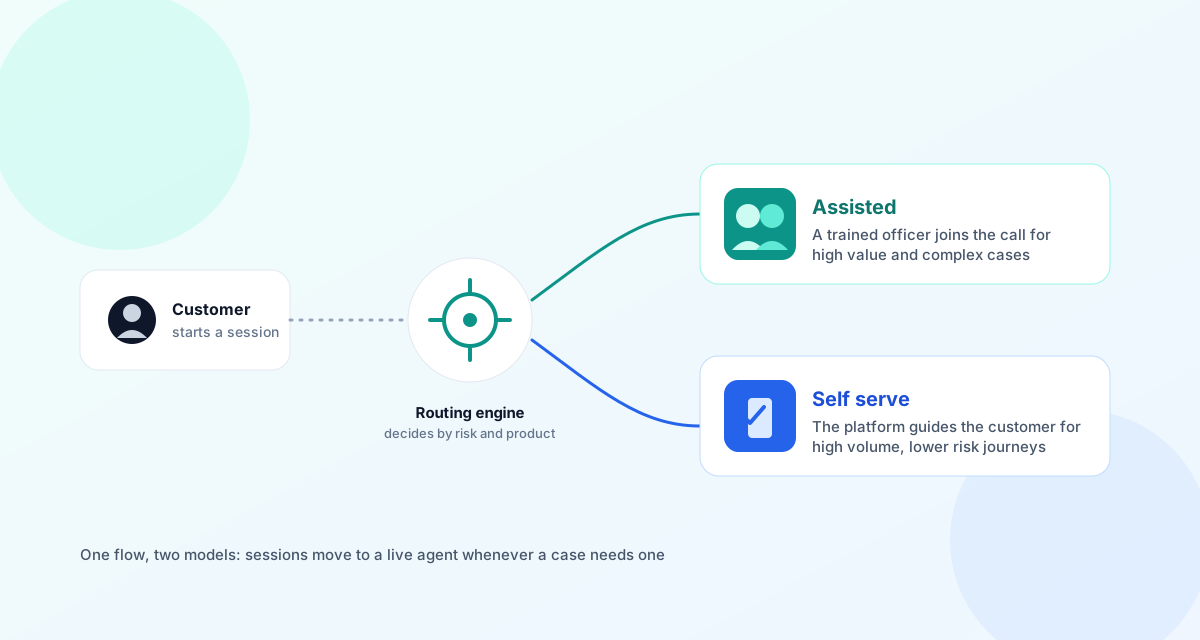
The honest answer is that most institutions should use both, and route between them.
- Send high value or complex cases to an assisted flow, where human judgement is worth the agent’s time. Full bank accounts, large loans and wealth relationships belong here.
- Send high volume, lower risk journeys through a self serve flow, so customers are never waiting and your cost per account stays low.
- Build a flow that can move a session between the two in real time. If a self-serve customer hits something unusual, the platform should be able to bring in a live agent rather than fail the session.
Thought of this way, assisted and self serve stop being a choice you make once and become a dial you set per product, per risk band and even per session.
Where VideoCX fits
VideoCX supports both models in one platform. Sessions can be fully agent led, fully self serve, or a blend where the automated checks run first and a live officer steps in only when a case needs one. An intelligent routing engine decides where each customer should go based on your rules, so your agents spend their time on the cases that truly need them while everyday volume clears itself. That is how institutions keep onboarding both compliant and comfortable without staffing for the peak.
To see how routing between assisted and self serve works for your products, explore our Video KYC platform or talk to our team.